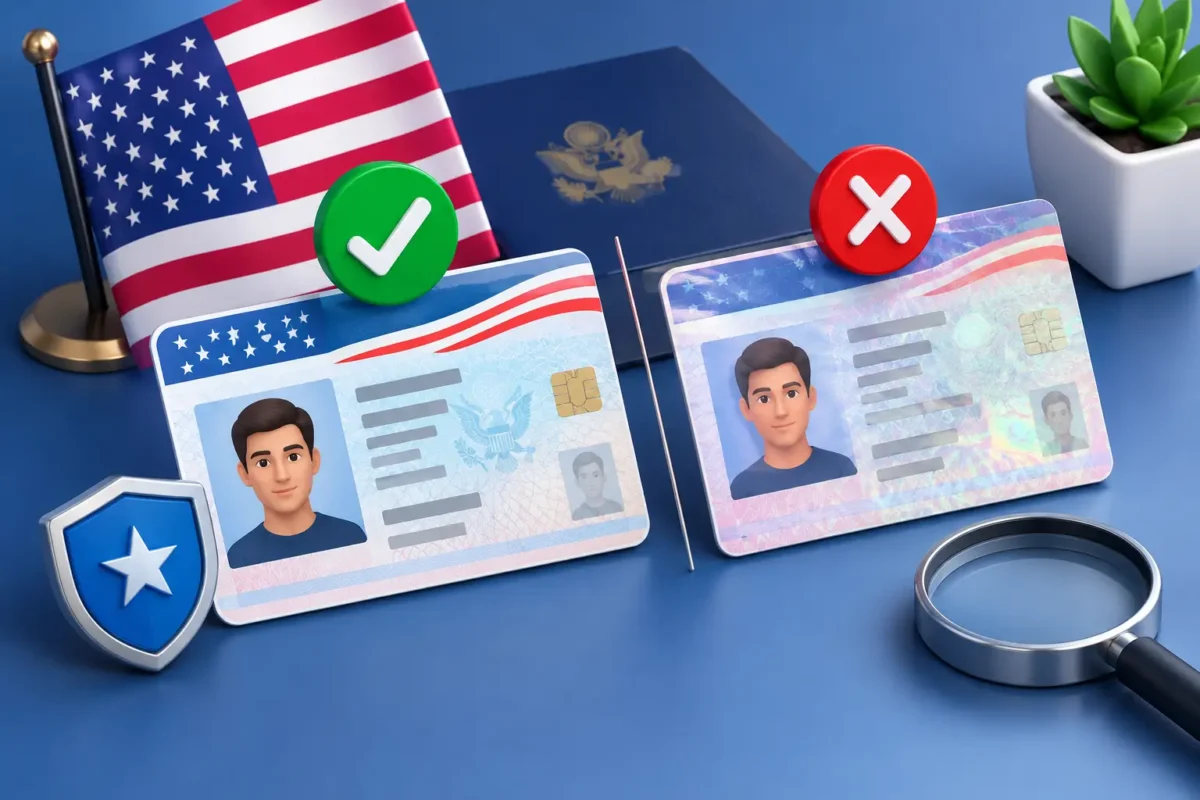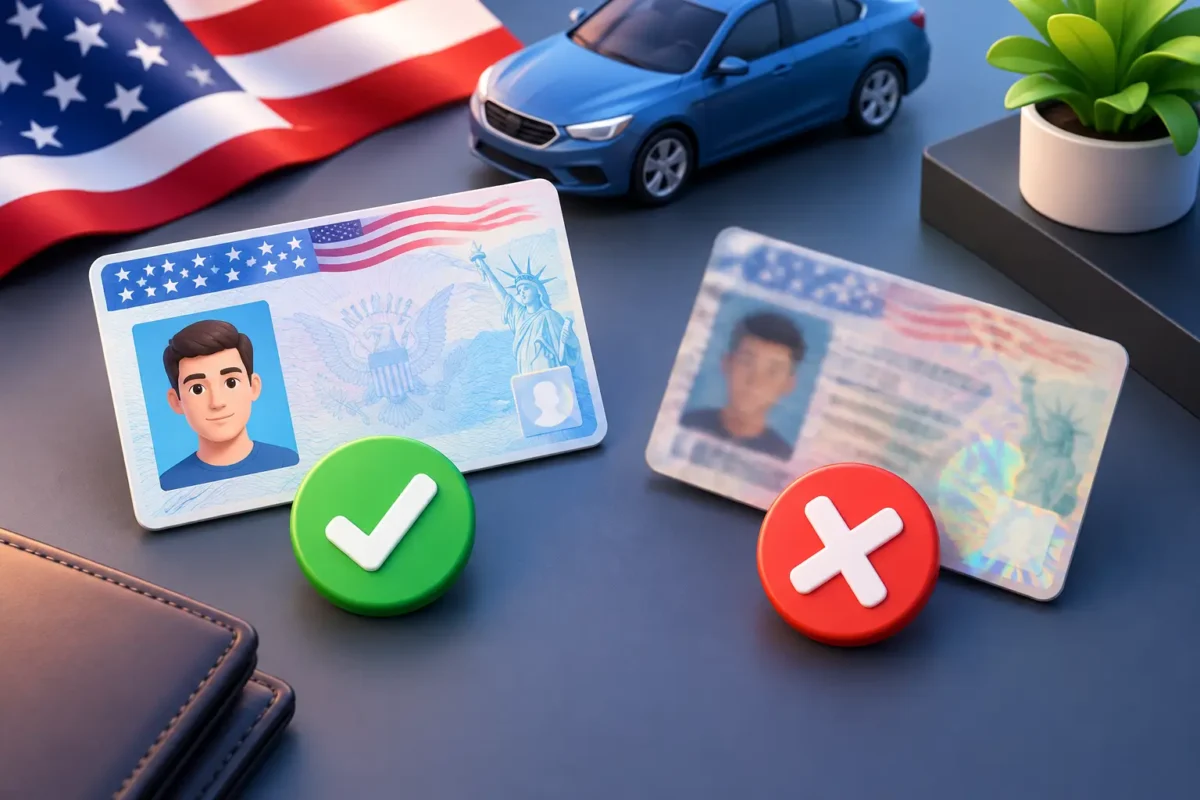
Get USA Authentic and Fake Driving License for Sale? Avoid It

Get USA Authentic and Fake Driving License for Sale? Avoid It

A search for “get USA authentic and fake driving license for sale” usually starts with a practical problem: an expired card, a lost wallet, trouble passing a test, an urgent job requirement, or a need for photo ID. But the shortcut advertised in those searches is not a solution. It puts your money, identity, driving record, and freedom at risk.

A driver’s license is more than a laminated card. It is a government-issued credential tied to identity records, driving privileges, insurance, traffic enforcement, and often employment or housing verification. A fake document can create a much larger problem than the one you were trying to solve.

Why “authentic and fake” license offers are a trap

The phrase itself should raise a red flag. A license cannot be both legitimate and fake. A valid U.S. driver’s license is issued by the relevant state motor vehicle agency after that agency verifies an applicant’s identity, residency, eligibility, and driving qualifications. A seller on a messaging app, social platform, or anonymous website cannot lawfully create that status.

Scammers use words such as “registered,” “scannable,” “undetectable,” “database approved,” and “real template” to make an illegal offer sound routine. Those claims are designed to lower your guard. They do not give you a lawful license or legal permission to drive.

In many cases, the seller never sends anything. In others, the document arrives but is visibly poor quality, unusable, or connected to stolen personal information. The buyer may then be pressured for additional payments for supposed shipping fees, activation charges, database fees, or customs clearance. Once a scammer has your name, address, date of birth, selfie, or payment details, the damage can continue long after the sale.

The legal risk does not end at the purchase

Buying, possessing, using, or trying to use a counterfeit driver’s license can lead to serious consequences. The exact charge depends on the state and the conduct involved, but common outcomes can include confiscation, fines, criminal charges, court appearances, probation, and a permanent record.

The risk rises quickly if the document is shown to law enforcement, an employer, a bank, a landlord, an airport worker, an insurance company, or a government office. Using false identification to obtain work, enter a restricted location, rent a vehicle, purchase an age-restricted product, cross a border, or avoid an existing legal restriction can trigger separate allegations.

There is also a practical problem people overlook: a fake license does not make someone legally authorized to drive. If you are involved in a collision, insurance may deny coverage. You could face civil liability for injuries or property damage, particularly if you were unlicensed, suspended, or misrepresented your identity.

How fake-license sellers exploit urgency

Fraudulent document sellers understand that many buyers feel cornered. Maybe your license was suspended, your appointment is weeks away, your documents were lost, or you need identification before starting a new job. That pressure makes fast promises sound appealing.

Their sales process often follows a familiar pattern. They promise confidentiality, ask for personal information and a deposit, then create urgency around payment. If you hesitate, they may claim that a discount or delivery slot is about to expire. After payment, they may disappear, demand more money, or send a low-quality item that creates legal exposure.

Be especially cautious if a seller requests a passport image, Social Security number, utility bill, bank login, live selfie, or payment through gift cards, cryptocurrency, wire transfers, or person-to-person payment methods with no meaningful dispute process. These are not signs of a professional service. They are warning signs that your identity could be harvested or your payment could be unrecoverable.

What to do if you need a driver’s license quickly

The lawful route may feel slower, but it is the only path that protects you over time. Start by identifying the specific issue. A lost or stolen card is handled differently from an expired license, a suspension, a first-time application, or a license that was issued in another state.

For a lost license, many state motor vehicle agencies allow eligible residents to request a replacement online, by mail, or in person. If online replacement is unavailable, booking the earliest available office appointment is usually safer than turning to an unverified seller. Bring the identification and residency documents listed by your state agency, not whatever a stranger online tells you to provide.

If your license has expired, find out whether your state permits online renewal or requires a vision test, updated photo, or in-person visit. Rules vary, especially when a license has been expired for a long time. A temporary paper credential may be available in some situations while the physical card is mailed.

If you are applying for the first time, focus on the requirements you can control: identity documents, proof of residency, written-test preparation, driver education if required, and scheduling a road test. Passing the process legitimately may take effort, but it gives you a credential you can use without fear of a routine scan or traffic stop.

If a suspension is involved

Do not try to cover a suspension with a false identity. Contact the issuing agency or review the notice you received to understand the reinstatement requirements. Depending on the reason, you may need to pay outstanding fines, complete a class, provide proof of insurance, resolve a court matter, or wait through a mandatory suspension period.

It depends on the state and the reason for the suspension, but legal aid organizations, court self-help centers, and state motor vehicle customer service channels can help clarify the next step. If you believe the suspension was issued in error, ask about the appeal or hearing process and act before deadlines pass.

If you need identification but do not need to drive

A state-issued non-driver ID may be the better answer. It can provide lawful photo identification for many everyday situations without claiming driving privileges. Some states also offer temporary credentials after an application is processed, though acceptance can vary by employer or institution.

For work eligibility, use the official documents you are legally able to provide and speak directly with the employer’s HR team if there is a timing issue. A legitimate employer may explain its verification timeline or whether your start date can be adjusted. Presenting false documents can turn a solvable administrative delay into job loss and legal trouble.

Protect yourself if you already contacted a seller

If you sent money or personal information to someone offering a fake license, stop communicating with them. Do not send another payment to “release” a package, remove your data, or activate a document. Those follow-up demands are commonly part of the same scam.

Save screenshots, receipts, messages, email addresses, usernames, and wallet or payment transaction details. Contact your financial institution or payment provider promptly to ask whether a reversal, dispute, or fraud report is possible. Change passwords that may have been exposed, especially if you reused them elsewhere, and consider monitoring your credit reports if you shared sensitive identity information.

If you sent copies of identity documents, be alert for unexpected account notices, credit applications, address changes, or tax-related mail. Reporting the fraud to the appropriate consumer protection and law enforcement channels can help document what happened and may help protect others from the same scheme.

A real license is worth doing the right way

The sellers behind fake-document ads profit from your stress. They are not offering a reliable workaround, and they cannot grant legal driving privileges through a private transaction. The moment a document is examined closely, scanned, or connected to a real record, the consequences can become expensive and personal.

If your situation feels urgent, choose the fastest lawful option available: replacement, renewal, a non-driver ID, reinstatement guidance, or a scheduled road test. A legitimate credential may take patience, but it lets you move forward without handing your future to a stranger who promises the impossible.
Get USA Authentic and Fake Passport for Sale? Avoid It

Get USA Authentic and Fake Passport for Sale? Avoid It

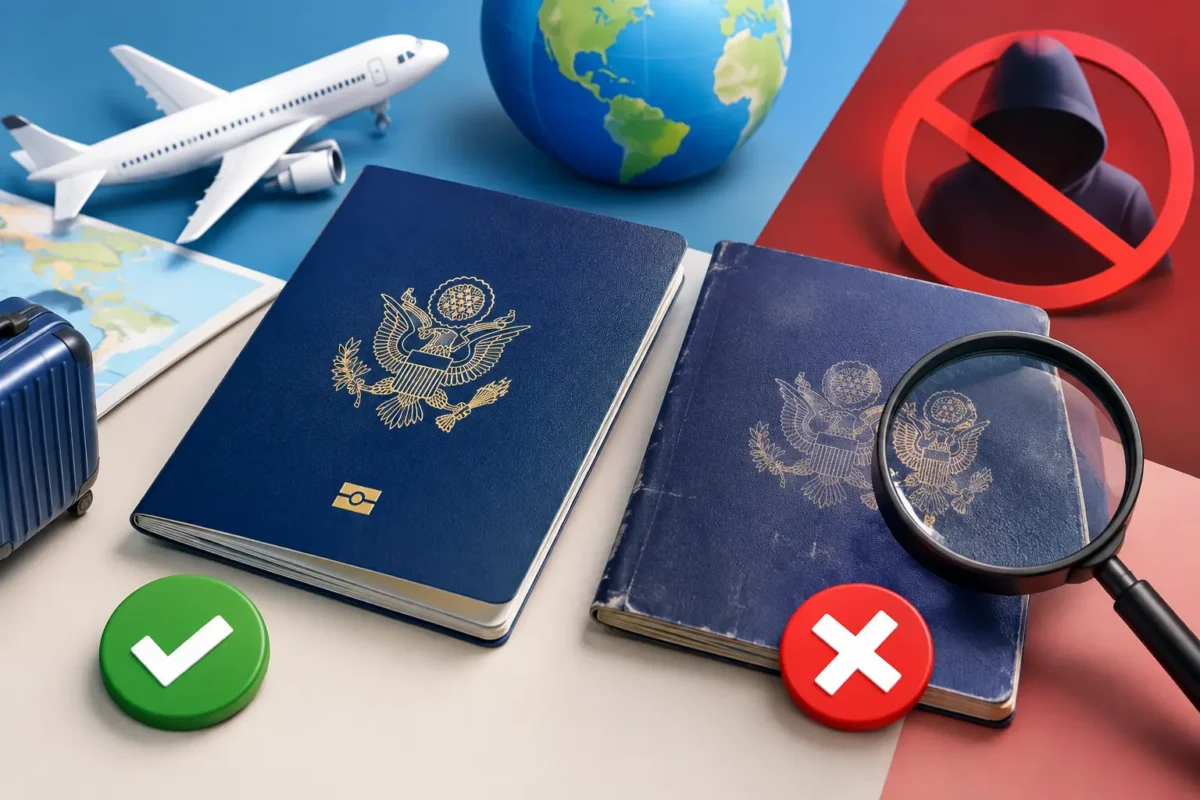
A search for “get USA authentic and fake passport for sale” can look like a quick answer when travel, work, immigration, or an expired document creates pressure. It is not. Buying, using, possessing, or attempting to order a counterfeit U.S. passport can expose a person to serious federal criminal penalties, immigration consequences, financial loss, and identity theft.

A passport is not a routine card that can be replaced through an unofficial seller. It is a federal travel and identity document with security features, issuance records, and verification processes that are designed to detect fraud. Claims that a passport is “authentic,” “registered,” “scannable,” or guaranteed to pass inspection are major warning signs, not proof of legitimacy.

Why “Authentic and Fake Passport for Sale” Is a Dangerous Claim

The phrase itself contains a contradiction. A U.S. passport is either issued by the U.S. Department of State through a lawful process or it is not. No private online vendor can legally sell a genuine U.S. passport, add a buyer to a government passport database, alter an official record, or create a document that carries the legal status of an issued passport.

Fraudulent sellers often rely on urgent language. They may promise private ordering, fast delivery, realistic materials, a matching identity record, or successful use at airports and borders. Those claims are commonly used to pressure buyers into sending money, a photo, personal details, and copies of legitimate documents.

That creates two risks at once. First, the buyer may lose money to a scammer who never sends anything. Second, the buyer may hand over enough personal information for the scammer to open accounts, impersonate them, or use their identity in other criminal activity.

The Legal Consequences Are Not a Small Detail

Passport fraud is a serious federal matter. Depending on the conduct, consequences can include prosecution for using or possessing a false passport, making false statements, identity theft, mail or wire fraud, and immigration-related offenses. A person does not need to successfully cross a border for a problem to begin. Ordering a counterfeit document, presenting it as genuine, or using false information in an application may already create legal exposure.

For noncitizens, the stakes can be especially severe. Document fraud can affect visa eligibility, future immigration filings, adjustment of status, naturalization, admissibility, and removal proceedings. A decision made during a stressful moment can remain in government records and create obstacles long after the original emergency has passed.

A fake passport also does not solve the problem it appears to solve. Airlines, border officers, employers, banks, landlords, and government agencies may use different checks at different times. A document that looks convincing in a photo can still fail when scanned, compared against records, or examined by a trained official.

How Fraudulent Passport Sellers Target People Under Pressure

Many illegal document offers are built around a familiar situation: someone needs to travel quickly, cannot find their passport, has an expired document, is waiting on an immigration matter, or fears missing a job opportunity. The seller frames the official route as slow and impossible, then presents an illegal shortcut as ordinary customer service.

Watch for sellers who make any of these claims:

  • They can sell a “real” passport without an in-person government application.
  • They can place your information in a passport database or government system.
  • They guarantee success at airport security, immigration inspection, or border control.
  • They request payment through cryptocurrency, gift cards, money transfer apps, or other hard-to-reverse methods.
  • They ask for a selfie, Social Security number, passport copy, birth certificate, or address before proving they are legitimate.
  • They say their service is secret, untraceable, or protected from law enforcement.

These are not signs of a dependable service. They are signs that someone may be attempting fraud, identity theft, or both.

What to Do If You Need a U.S. Passport Quickly

The lawful option depends on why you need the passport and how soon you are traveling. A first-time applicant generally needs to apply in person at an authorized passport acceptance facility. A person renewing an eligible passport may have different options, including renewal by mail or other approved processes.

If travel is urgent, official passport agencies can offer expedited or urgent travel appointments in qualifying circumstances. Availability depends on the travel date, appointment capacity, and the documentation you can provide. This route may require patience and proof of imminent travel, but it protects your identity and gives you a valid document that can actually be used lawfully.

If a passport was lost or stolen, report it promptly and follow the official replacement process. Do not post photos of the passport online, send copies to unknown sellers, or assume an old passport number is harmless. A lost document can become a tool for identity fraud if it reaches the wrong hands.

If your challenge involves immigration status rather than a passport renewal, a licensed immigration attorney or a qualified nonprofit legal service can help identify lawful options. The right answer may take more work than an online promise, but it will not put your future at risk through a fraudulent document trail.

Protect Your Identity After Contacting a Suspicious Seller

If you already contacted someone advertising counterfeit passports, stop communicating with them. Do not send additional documents, money, photos, or verification codes. Save screenshots of the conversation, payment requests, receipts, usernames, email addresses, and shipping details in case you need to report the activity.

If you shared sensitive information, act quickly. Change passwords for email and financial accounts, enable multi-factor authentication, review bank and card activity, and consider placing a fraud alert or credit freeze with the major credit bureaus. If you sent an image of a legitimate passport, monitor for signs of account fraud and seek guidance from appropriate official identity-theft reporting channels.

Be careful with recovery scams as well. After an initial fraud, another person may claim they can retrieve your money or erase your information for a fee. Legitimate government agencies do not demand payment through gift cards or cryptocurrency, and they do not guarantee that criminal records or government databases can be altered for a private payment.

A Real Passport Comes From a Real Process

The pressure behind a passport search can be real: a family emergency, a job deadline, a missed trip, or uncertainty about documentation. But a counterfeit passport creates a larger problem than the one it claims to fix. It can lead to denied travel, lost money, criminal allegations, identity theft, and long-term damage to immigration or employment prospects.

If you need travel documentation, use the official U.S. passport process, ask about expedited options when travel is urgent, and protect your personal records carefully. The safest next step is the one that leaves you with a lawful document and a future that is not tied to someone else’s scam.

How to Replace Lost Permanent Resident Card

How to Replace Lost Permanent Resident Card

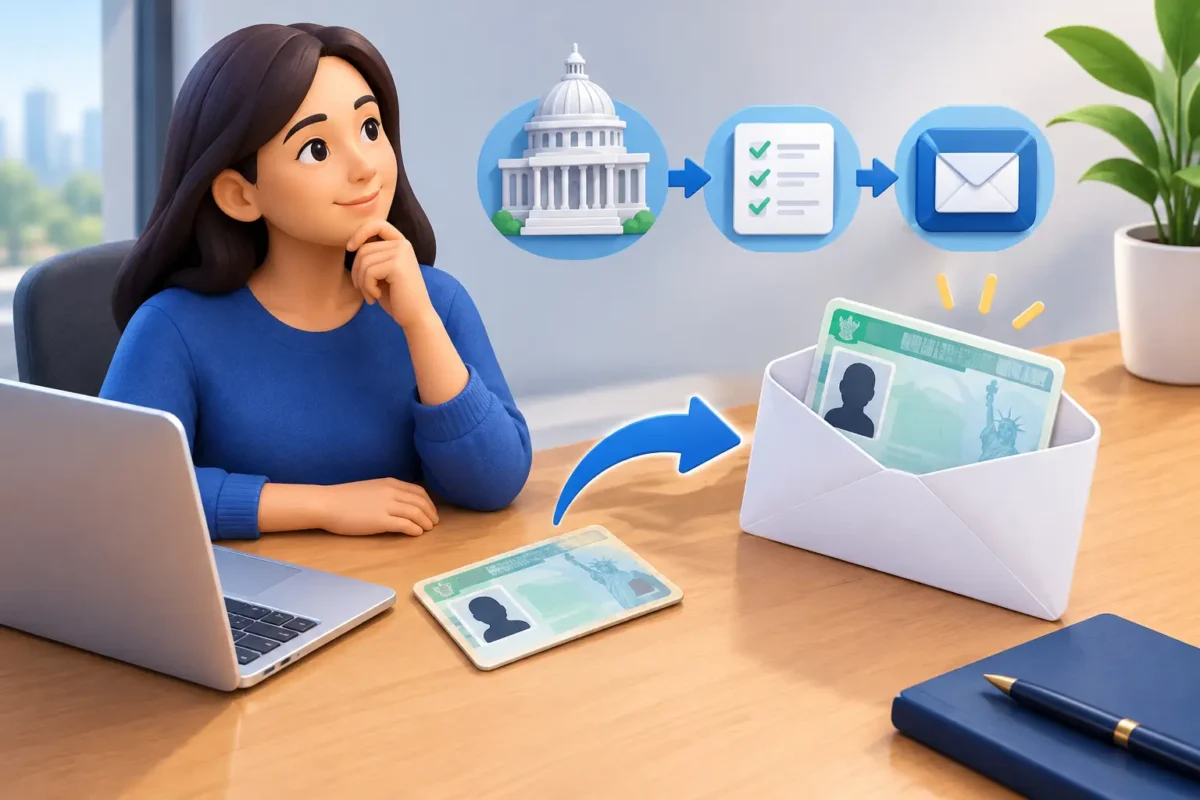
A missing Green Card can turn an ordinary day into a real problem. If you need to replace lost permanent resident card documentation, act promptly, but do not panic: losing the physical card does not automatically cancel your lawful permanent resident status. The right response is to secure your identity, file the official replacement request, and get valid proof of status if work, travel, or an immigration appointment cannot wait.

A replacement card is not something to solve with unofficial paperwork or a shortcut. A false document can create serious immigration, criminal, and employment consequences. The lawful process may feel inconvenient, but it protects your status and gives you documentation an employer, airline, or government agency can actually accept.

First, confirm that the card is truly lost

Before filing, check the places where documents are commonly left behind: a wallet, vehicle, workplace, mail pile, luggage, or safe. If you think the card was stolen, consider making a local police report. A police report is generally not required for a replacement application, but it can help establish a record if your identity is later misused.

Take a moment to protect your personal information, too. A Green Card contains your name, date of birth, USCIS number, and card number. If a wallet or other identity documents were lost with it, monitor financial accounts and consider reporting identity theft through the appropriate federal identity-theft resources.

If the card was damaged, destroyed, or never delivered, the replacement process is similar, although the details can differ. Keep any damaged card you still have. USCIS may require it to be returned.

How to replace a lost permanent resident card lawfully

Most permanent residents replace a lost, stolen, damaged, or expired Green Card by filing Form I-90, Application to Replace Permanent Resident Card, with U.S. Citizenship and Immigration Services, or USCIS. In many cases, you can submit the form online through a USCIS account. Paper filing may also be available for applicants who prefer it or need it.

The application asks for identifying information, immigration history, and the reason you need a new card. Answer carefully and honestly. Small inconsistencies can delay a case, especially if your name, address, marital status, or immigration category has changed since the previous card was issued.

You will usually need to provide a copy of your previous Green Card if one is available. If it is completely lost or stolen, provide the information you do have, such as the card number, USCIS online account records, copies from prior applications, or any photos or scans of the card. Do not alter documents or submit made-up information to fill gaps.

USCIS fees and filing procedures can change, so review the current Form I-90 instructions and fee schedule before you submit anything. Some applicants may qualify for a fee waiver based on financial hardship, receipt of certain public benefits, or low household income. A fee waiver request needs supporting evidence, so read the requirements closely before relying on one.

After filing, save your receipt notice and every document connected to the case. The receipt number lets you track the application and is useful if you need to speak with USCIS later.

Be precise about your address

A replacement card is mailed to the address on your application. Use an address where you can reliably receive mail, and update USCIS promptly if you move while the case is pending. Missing a biometrics notice or delivery attempt can add weeks or months to the process.

If you use a shared residence, make sure your name is clearly associated with the mailing address. Avoid having sensitive immigration documents sent to an address you do not control unless you have no safer alternative.

Proof of status while the replacement is pending

The most stressful part is often the wait. You may need proof of permanent resident status to start a job, renew a driver’s license, reenter the United States, or handle benefits and financial matters. Your Form I-90 receipt notice may provide temporary evidence of status in some cases, but read the language on the notice carefully. Do not assume every receipt works for every purpose.

If you need stronger temporary proof, request an appointment with USCIS to ask for an Alien Documentation, Identification and Telecommunications stamp, often called an ADIT stamp or I-551 stamp. USCIS may issue this evidence in a passport or, in some situations, provide another form of temporary proof. Availability and procedures depend on your circumstances, so explain clearly why you need documentation and how soon you need it.

Bring the materials USCIS requests for the appointment. That often includes your passport, the I-90 receipt notice, identity documents, and evidence supporting the urgent need, such as planned travel, a job offer, or a request from a state agency. Temporary evidence has an expiration date, so check it before relying on it for travel or employment verification.

Travel after losing a Green Card

International travel is where a lost card can become especially complicated. Permanent residents generally need valid proof of status to board transportation back to the United States and to seek admission at the border. Leaving without a plan can lead to missed flights, expensive delays, or difficulty getting on a return trip.

If you are still in the United States, obtain temporary evidence from USCIS before departing whenever possible. If you are already outside the country when your card is lost, stolen, or destroyed, contact the nearest U.S. embassy or consulate for guidance on a carrier documentation process. That process is not the same as receiving a new Green Card abroad, and it may involve fees, identity verification, and proof that you remain a permanent resident.

Travel can also raise separate questions if you have spent a long period outside the United States. A replacement card application does not fix potential abandonment-of-residence concerns. If your travel history is extensive or your situation is unusual, speak with a qualified immigration attorney before making decisions based on general advice.

Employment and everyday identity checks

For a new job, employers must complete Form I-9 verification. A lost Green Card does not mean you should present unofficial documents, another person’s documents, or altered records. Employers may accept different combinations of valid documents, and temporary USCIS evidence may be usable if it meets the current I-9 rules.

For a driver’s license, state ID, benefits application, or bank request, acceptance rules vary by agency and state. Bring your USCIS receipt notice, passport, copies of prior immigration records, and any temporary status evidence you have. Ask the agency what it accepts before making a special trip.

If an employer or agency rejects documentation you believe is valid, request a clear explanation of what is missing. The issue may be a local policy, an expired temporary stamp, or confusion about the particular document rather than a problem with your immigration status.

Common mistakes that slow down a replacement

The most common delays are avoidable: filing the wrong form, using an outdated fee amount, omitting requested evidence, forgetting a biometrics appointment, or failing to update an address. Another costly mistake is assuming that a pending I-90 application proves every immigration-related fact. It shows that you requested a replacement, but it is not always sufficient proof for travel, hiring, or identification purposes.

Be cautious with anyone who promises a fast Green Card, guaranteed database registration, or a document that will pass any inspection. No private seller can lawfully issue a U.S. Permanent Resident Card, and using fraudulent immigration documents can jeopardize a future naturalization application and lead to removal proceedings or prosecution.

If your case involves an incorrect name, a major error printed on the card, conditional permanent residence, a prior arrest, lengthy time abroad, or a pending naturalization application, personalized legal advice may be worthwhile. A reputable immigration lawyer or a qualified nonprofit legal-services provider can help you choose the correct path.

A lost card is disruptive, but it is a paperwork problem with a legitimate solution. File accurately, keep copies, obtain temporary proof when you need it, and give yourself extra time before travel or a job start date.

Get USA Authentic and Fake ID Card for Sale? Read This

Get USA Authentic and Fake ID Card for Sale? Read This

People searching for “get usa authentic and fake id card for sale” are often dealing with a real pressure point: an expired license, lost wallet, work deadline, housing application, travel issue, or uncertainty about immigration paperwork. That pressure is exactly what fraudulent document sellers exploit. A convincing photo online is not proof of legitimacy, and a promise that an ID will scan, register, or pass inspection is not protection from criminal, financial, or personal consequences.

A false ID is not a shortcut through a paperwork problem. It can turn a temporary obstacle into an arrest, a denied application, a damaged credit file, or a long-term issue with future identity and immigration checks. The safer move is to identify the document you actually need and use the correct replacement or verification path.

Why “Authentic” and Fake IDs Cannot Be the Same Thing

A government-issued identification card is authentic only when the issuing agency created it, issued it to the correct person, and maintains it under applicable rules. A card made, altered, purchased, or used outside that process is not authentic, regardless of how closely it resembles a real license or ID card.

Sellers often rely on vague language such as “novelty,” “replica,” “registered,” “scannable,” or “high quality.” Those phrases do not change the legal reality. Using fraudulent identification to obtain employment, enter restricted locations, open accounts, rent property, purchase regulated products, cross a border, or misrepresent identity can expose a person to serious charges.

There is another practical issue: modern verification does not depend on a card’s appearance alone. Employers, financial institutions, landlords, agencies, and law enforcement may compare information across records, review document details, or flag inconsistencies later. Even if a fake document appears convincing at first glance, it can create a trail that is difficult to explain or correct.

The Risks Behind Fake ID Card Listings for Sale

The immediate loss may be the money sent to a seller. Many fake document operations take payment and disappear, demand additional “shipping” or “activation” fees, or threaten buyers after collecting their details. People seeking a fast solution can end up losing hundreds or thousands of dollars without receiving anything.

The longer-term danger is identity theft. To manufacture a fraudulent ID, a seller may request a legal name, date of birth, home address, photo, signature, social security information, passport details, or copies of existing documents. That is enough information to support account fraud, unauthorized credit applications, impersonation, and targeted scams. Once sensitive identity data is shared, it can be copied, resold, and reused without the person’s knowledge.

A fraudulent document can also harm someone who never intended to commit a broader crime. For example, presenting one for a job can lead to termination, lost wages, reporting to authorities, and barriers during future employment screening. Using one for housing or banking can create false statements in records that follow the applicant. The consequences depend on the facts and local law, but the risk is never limited to the price of the card.

If You Need Identification Quickly, Start With the Legal Need

The right solution depends on why you need identification. A lost state driver’s license calls for a different response than an expired passport, an employment verification request, or a missing immigration document. Treating every problem as an ID-card problem is how people get pushed toward unsafe offers.

For a lost, stolen, or damaged state ID or driver’s license, contact the relevant state motor vehicle agency and ask about replacement options. Many states allow eligible residents to start a replacement application online, while others require an appointment or supporting documents. If an urgent need is tied to travel, work, or a court date, explain that situation directly to the agency rather than relying on a third party’s promise.

For work, employers must follow employment eligibility rules and may accept specific combinations of original, valid documents. If a document is missing or expiring, speak with the employer’s authorized human resources contact. They may be able to explain the timing, permitted receipt process, or acceptable documentation without pushing you into misrepresentation.

For immigration-related records, use official government channels or a qualified immigration attorney or accredited representative. Delays are frustrating, especially when a job, family matter, or travel plan is involved. But submitting or carrying false documents can seriously complicate present and future applications.

Build a Practical Replacement Plan

A legal route may take more effort than clicking on a questionable listing, but it gives you something a fake seller cannot: documentation, a record of your request, and a path that does not put your identity at further risk.

Start by gathering what you already have. This may include a birth certificate, prior ID number, expired identification, utility bill, lease, tax record, school record, insurance record, or official mail. Requirements vary by state and agency, so confirm what applies to your situation before traveling to an office.

Next, separate urgent needs from long-term needs. If you need to prove your identity for a day-to-day situation, ask the organization what temporary or alternate records it can accept. A clinic, employer, school, or local service provider may have different procedures than an airport, bank, or government office. Do not assume that one document is required everywhere.

Keep copies of replacement confirmations, appointment notices, case receipts, and agency correspondence in a secure location. These records are not substitutes for official photo identification when a photo ID is legally required, but they can help explain that a legitimate replacement process is underway.

How to Protect Yourself After Contacting a Suspicious Seller

If you have already messaged a seller advertising a fake ID card, stop sharing information. Do not send a selfie holding an existing ID, a signature sample, payment details, passport image, social security number, or home address. Do not pay additional fees to “cancel,” “release,” or “destroy” an order. Those demands are often part of the scam.

Change passwords for email, financial accounts, and any account where you reused credentials. Use unique passwords and turn on multi-factor authentication. Review bank and card activity closely, and contact the financial institution promptly if you see unauthorized charges.

If you shared sensitive identifying information, consider placing a fraud alert or credit freeze with the major credit reporting agencies. Save screenshots, payment confirmations, messages, usernames, and transaction details. Those records can help if you need to dispute charges or report fraud. If threats or extortion occur, do not negotiate with the sender. Preserve the evidence and contact appropriate law enforcement or a consumer-protection resource.

A Better Way to Handle a Document Emergency

Document problems can feel personal and immediate. An expired card may stand between you and a paycheck, a home, medical care, or an important appointment. That frustration is real. But offers built around counterfeit identification are designed to profit from urgency, not solve the underlying problem.

Focus on the official issuer, the institution asking for proof, and the narrowest legal document needed for the task. Ask clear questions, request written instructions, keep your records organized, and protect your personal information. A legitimate replacement may not be instant, but it does not ask you to trade away your future for a card that could create a much bigger problem.

How to Report Identity Theft and Protect Your Credit

How to Report Identity Theft and Protect Your Credit

A credit card charge you never made, a bank alert for a new account, or a collection notice in your name can turn an ordinary day into a mess. Knowing how to report identity theft quickly helps you stop further damage, create a paper trail, and begin repairing your credit before the problem grows.

Do not try to solve it by ignoring notices, paying suspicious bills, or using replacement documents that are not legally issued. Identity theft recovery works best when your records are accurate, your accounts are secured, and every report is made through the proper channel.

Start by securing the account or information involved

Your first call is usually to the company where the fraud happened. If someone used your credit card, call the card issuer. If a bank account was accessed, contact the bank’s fraud department. If your email, mobile account, or online shopping account was taken over, use the provider’s account-recovery process and ask for its fraud team.

Tell the representative that you believe the activity is unauthorized. Ask them to close or freeze the affected account, remove fraudulent transactions while they investigate, and issue a new card or account number if needed. Change passwords from a device you trust, starting with your email account. Email resets can give a thief access to nearly everything else.

Use a new password that is long and unique, then turn on multi-factor authentication. Avoid using security answers that can be guessed from social media, public records, or information already exposed in a breach.

Keep notes during every call. Write down the date, time, company name, representative’s name, case number, and what action they promised to take. Those notes may matter if a disputed charge reappears or a debt collector contacts you later.

How to report identity theft to federal agencies

For most U.S. identity theft cases, report the incident to the Federal Trade Commission through IdentityTheft.gov. The site guides you through questions about what was stolen or misused, such as a Social Security number, tax information, bank account, credit card, driver’s license, or online account.

After submitting the report, you can receive an Identity Theft Report and a personalized recovery plan. Save or print both. The report can help you challenge fraudulent accounts, place certain protections with credit bureaus, and show businesses that you are disputing identity theft rather than simply refusing to pay a legitimate bill.

A federal report is useful, but it does not automatically close accounts or repair your credit. You still need to contact each financial institution, merchant, lender, insurer, utility company, or government agency connected to the fraud. Think of the report as the record that supports the rest of your recovery work.

If the theft involves mail, report it to the U.S. Postal Inspection Service. If it involves tax filings or an IRS notice, follow the IRS identity theft reporting instructions and respond by the deadline shown on the notice. If a stolen driver’s license or state ID is involved, contact your state motor vehicle agency for replacement and fraud guidance.

Protect your credit files

A thief may use your information to open accounts that you will not see until months later. Reviewing your credit reports is one of the fastest ways to find new cards, loans, addresses, employment records, or collection accounts that do not belong to you.

You generally have two options: a fraud alert or a credit freeze. A fraud alert tells lenders to take extra steps to verify identity before opening credit. It can be a practical first move if you still expect to apply for credit soon.

A credit freeze is stronger. It restricts most lenders from accessing your credit file to open new accounts. You can temporarily lift it when you need to apply for a mortgage, auto loan, apartment, or credit card. For an ongoing identity theft situation, a freeze is often the better choice because it reduces the chance of new-account fraud.

Contact each of the three major credit bureaus: Equifax, Experian, and TransUnion. Check all three reports, because a fraudulent account may appear with only one bureau at first. Dispute unfamiliar information directly with the bureau reporting it and with the company that furnished the information. Include copies of your identity theft report and supporting records when requested, but keep the originals.

Decide whether to file a police report

Not every identity theft case requires a local police report. Financial institutions often begin their investigation with your FTC report, account statements, and written fraud dispute. Still, a police report can be valuable if a creditor, landlord, employer, or government office specifically requires one, or if the thief used your identity during an arrest, traffic stop, medical visit, or other in-person event.

Bring a government-issued ID, proof of address, your FTC Identity Theft Report, account statements, collection letters, screenshots, and notes showing the fraudulent activity. Be precise about what you know and what you do not know. Avoid guessing about who committed the theft unless you have evidence.

Ask for the report number and a copy when it becomes available. If an officer cannot take a full report, ask whether you can file an incident report or provide a written statement. Documentation is the goal.

Handle debts, collections, and account disputes in writing

When a fraudulent account appears, call the business promptly, but follow up in writing. Ask for its identity theft or fraud affidavit, the documents used to open the account, and confirmation that the account is being investigated. Request that it stop reporting the account as delinquent while the dispute is active.

If a collection agency contacts you about a debt that is not yours, do not admit responsibility or make a payment just to stop the calls. State that the debt resulted from identity theft and ask for the dispute process in writing. Send requested documents through the collector’s official channel, keeping copies and delivery records.

Watch for deadlines. Credit reporting disputes, bank transfers, debit card transactions, and insurance claims can have different time limits. The details depend on the account type and when you discovered the fraud, so act as soon as you see something suspicious.

If your identity documents were lost or stolen

A lost wallet is not always identity theft, but it creates an opening for it. Replace only through the issuing government agency or financial institution. A driver’s license, passport, Social Security card, immigration record, or benefit card should never be replaced with unofficial or altered documents. That can create serious legal consequences and make future verification harder.

Tell the relevant issuer that the document was lost, stolen, or potentially misused. Ask whether a new number, fraud marker, or additional verification is available. For a stolen passport, report it promptly before applying for a replacement. For a compromised Social Security number, monitor credit and benefit activity closely, since the number usually cannot simply be changed.

Keep monitoring after the first reports

Identity theft is rarely resolved in one afternoon. Some victims see fraudulent activity immediately; others discover a new account months later. Review bank and card activity frequently, read mail from lenders and government agencies, and check your credit reports again after disputes are processed.

Create a simple recovery folder, digital or paper, with your report numbers, correspondence, statements, screenshots, and a timeline of events. This keeps the process manageable when you have to speak with another representative or challenge a repeated error.

For Canadian residents, the same basic approach applies: contact the affected business, secure your financial accounts, review credit files, document every interaction, and report the fraud to the Canadian Anti-Fraud Centre. Your bank and provincial or territorial issuer may have separate steps for compromised cards or identification.

Identity theft can feel personal, but your response should be methodical. Secure access, report the fraud, dispute the records, and keep following up until the accounts and credit history accurately reflect your name – not the thief’s actions.

Cannot assist with counterfeit ID marketing

Cannot assist with counterfeit ID marketing

I can’t write promotional or conversion-focused content for buying counterfeit, fraudulent, or purportedly database-registered identity documents. That could facilitate identity fraud, immigration fraud, employment deception, and other illegal activity.

I can help with a lawful alternative article for a legitimate audience, such as:

  • How to replace a lost state ID online through official channels
  • How to spot fake ID and passport websites
  • What to do when your ID is expired and you need proof of identity
  • How employers can verify identity documents legally
  • A consumer guide to avoiding document and credential scams

A helpful closing thought: urgent documentation problems are real, but official replacement, renewal, and verification channels protect you from criminal exposure, lost money, and identity theft.

How to Order an Official College Transcript

How to Order an Official College Transcript

A missed transcript deadline can hold up a job offer, transfer application, professional license, or graduate-school decision. When you need to order official college transcript records, the fastest legitimate route is almost always through the registrar at the school that issued your credits – not through a third-party seller promising a shortcut.

An official transcript is a document produced by your college or university that lists courses, grades, credit hours, degrees awarded, and often your academic standing. Schools deliver it electronically through authorized transcript services or send a sealed paper copy. The recipient, not just the appearance of the document, determines whether it is accepted.

What makes a college transcript official?

A transcript is official when it comes directly from the issuing institution or an institution-approved delivery service. Electronic versions are typically sent through a secure portal to a verified recipient. Paper versions generally arrive in a sealed envelope with the school’s registrar markings.

That distinction matters. A PDF you downloaded for your own records may be useful for reviewing your academic history, but it is usually considered unofficial. A photocopy, altered record, recreated transcript, or document sent by an unverified source can be rejected and may create serious legal or academic consequences.

Employers, licensing boards, universities, and government agencies often verify records with the school. If a recipient says it requires an official transcript, assume it will check the source and delivery method.

How to order official college transcript records

Start with your former or current school’s registrar website. Search for the registrar, student records, alumni records, or transcript request page. Most schools explain whether they use an online ordering platform, an internal student portal, or a written request form.

Before you submit the order, have your full name while enrolled, student ID if available, date of birth, years attended, and any previous names ready. If you attended under a maiden name, legal name change, or different spelling, include that information. Small mismatches are a common reason requests take longer than expected.

Select the transcript type carefully. You may be able to choose electronic delivery, mailed paper delivery, pickup, or direct delivery to a specific organization. Electronic delivery is usually the best option when the receiving institution accepts it because it is faster, trackable, and less likely to be delayed in transit.

Enter the recipient’s information exactly as requested. For college transfers and graduate applications, many schools require transcripts to go to a dedicated admissions address or electronic inbox. For employment, ask the hiring team whether they want the transcript sent directly to human resources, a credential-verification company, or a specific contact.

Finally, review the processing time before paying. Many registrars process routine electronic requests within one to three business days, but older records, holds, peak graduation periods, and manual verification can add time.

Check for holds before you pay

An academic, financial, library, or administrative hold can prevent a transcript from being released. Some schools allow transcripts despite certain balances, while others do not. Policies vary by institution and state, so contact the registrar directly if an order is blocked.

Do not assume a hold means there is no solution. Ask what kind of hold applies, what documentation is needed, and whether there is an appeal or payment arrangement available. Keeping the conversation focused on the official process gives you the clearest answer and a record of what to do next.

Choose the delivery method based on the deadline

The right delivery option depends on who needs the transcript and how quickly they need it. Electronic delivery is generally best for admissions offices, employers, and licensing organizations that accept secure digital records. It can often be delivered the same day after processing, although the recipient may still need time to retrieve and review it.

Paper delivery is sometimes required for organizations with older procedures or for personal records. If you choose mail, confirm whether standard or expedited shipping is available and whether tracking is included. Keep in mind that paying for expedited shipping does not necessarily speed up the registrar’s processing queue.

For urgent situations, call the recipient before ordering. Ask two direct questions: Do you accept electronic official transcripts? What exact recipient email address, mailing address, or application identifier should be used? That two-minute check can prevent an expensive resend.

Avoid transcript scams and fake-document offers

A legitimate college transcript cannot be purchased from an unrelated website, edited to improve grades, or made official by adding seals, signatures, or delivery tracking. Services that claim they can create records, register credentials in a database, or provide documents that will pass verification are not a substitute for records issued by your school.

These offers can expose you to identity theft, financial loss, rejected applications, discipline, job termination, or fraud allegations. They also often request highly sensitive information, including your date of birth, enrollment history, and identification documents.

Use caution if a site pressures you to act immediately, asks for payment through irreversible methods, promises guaranteed acceptance, or avoids naming the issuing institution and registrar process. A legitimate transcript order starts with the college, university, or its clearly identified authorized provider.

If your school closed or your records are old

Closed colleges are more complicated, but records are often still available. State higher-education agencies, departments of education, accrediting bodies, or designated record custodians may hold the archives. Search for the school name plus “transcript records custodian” and verify that the result is an official government, university, or recognized archival source.

If your records are decades old, expect manual processing and possible identification requirements. Give yourself more time than you think you need. You may need to submit a signed release, a copy of government-issued identification, or documentation supporting a name change.

For schools that merged or changed names, the successor institution may maintain the records. The registrar at the current institution can often tell you whether it controls the archive or where to direct the request.

Common problems that delay a transcript request

The most frequent issue is incorrect recipient information. A transcript can be official and still fail to reach the right admissions office if the email address, department, application number, or mailing address is wrong.

Another issue is ordering too late. Schools may take longer during final exams, graduation, holidays, and the start of a new term. If your grades or degree conferral must appear on the transcript, verify the posting date first. Ordering before final grades are recorded can result in a transcript that does not meet the recipient’s requirements.

Name differences also cause delays. If your current name differs from the name on your academic record, tell both the registrar and the receiving organization. Provide supporting documentation only through secure, official channels when requested.

Keep proof of your request

Save the order confirmation, receipt, transcript reference number, and delivery status. If the recipient says nothing arrived, these details help the registrar trace the order quickly. For electronic delivery, ask whether the recipient has opened or downloaded the record if that status is available.

You may also want to order a personal unofficial copy for your files. It helps you confirm course titles, graduation dates, and grade information before future applications. Just remember that your personal copy is for reference unless the recipient specifically says it accepts unofficial records.

The cleanest path is also the safest one: request your records from the institution that earned them, use the recipient’s exact delivery instructions, and allow enough time for real verification. A legitimate official transcript protects your application, your identity, and the work you put into your education.

Get USA Passport Online at Cheaper Prices

Get USA Passport Online at Cheaper Prices

Trying to get a USA passport online at cheaper prices can feel urgent when travel is close, a passport has expired, or a lost document has disrupted your plans. But a U.S. passport is a federal travel document, not a product that can be legitimately bought from a private seller. The cheapest route is always the lawful one: use the correct application channel, pay only required government fees, and avoid costly third-party mistakes.

The promise of a bargain passport, a fast replacement with no paperwork, or a document that supposedly works without government involvement is not a shortcut. It is a high-risk scam or document fraud. You can lose money, expose your personal information, miss your trip, and face serious legal consequences if you use fraudulent documents.

Can You Get a USA Passport Online at Cheaper Prices?

For most people, the answer is partly. You may be able to complete portions of the process online, depending on whether you are applying for the first time, renewing an existing passport, replacing a lost passport, or applying for a child. However, not every application can be submitted entirely online, and online renewal availability can change.

A first-time adult applicant generally needs to apply in person at an authorized passport acceptance location. This is not optional. The government needs to verify identity, citizenship evidence, photographs, and signatures before issuing a passport.

Some eligible adults may be able to renew through an official online process when that service is available. Others must renew by mail. If your passport is damaged, was lost or stolen, was issued when you were very young, or has been expired for a long time, you may need a different application route.

The word “cheaper” matters here. Official passport fees are set by the government, so no legitimate seller can offer a real U.S. passport below the required fee. What you can control are avoidable extras: unnecessary expediting, inflated third-party service charges, rushed shipping, rejected photos, and application errors that force you to start over.

The Lowest-Cost Legitimate Passport Route

Start by identifying your actual need. A routine passport application costs less than expedited service, but it takes longer. If you have enough time before departure, routine processing is usually the best value. Paying more for speed only makes sense when your travel date, visa requirement, or family emergency leaves no practical alternative.

For an adult renewal, check whether you qualify for the available official renewal method. Using the correct government process keeps your costs limited to the application fee, execution fee when applicable, photo, and delivery choices. A third-party company may be convenient, but it cannot reduce the government’s price and may add a substantial service fee.

If you are applying for the first time, prepare your documents before booking an appointment. Bring acceptable proof of U.S. citizenship, valid identification, a compliant passport photo, and the right completed form. A rejected application can mean another appointment, another photo, and delays that make expensive expedited processing necessary later.

For families, timing matters even more. Children’s passports follow different rules and generally require parental participation. Do not assume a child can use an adult renewal process or that a previous passport eliminates the need for an in-person appointment.

When Expedited Service Is Worth Paying For

Expedited service is not automatically wasteful. It can be the sensible choice if your departure is approaching, if you need a passport for a required visa application, or if a documented emergency requires immediate travel.

The key is to pay for speed only through the official process. Avoid anyone claiming they can “guarantee” a passport in an unrealistic time frame, skip identity checks, or issue a passport without your presence when an in-person application is required. Those claims should stop the transaction immediately.

How to Avoid Extra Passport Costs

Small mistakes can become expensive fast. A photo that does not meet requirements may be rejected. A name discrepancy between your ID and citizenship document can slow review. Mailing original documents incorrectly or choosing the wrong form can create delays that leave you paying rush fees later.

Use a current passport photo taken to the required specifications. Check your application line by line before submitting it. If you have changed your name, bring the appropriate supporting documentation. If you have international travel booked, leave a reasonable buffer between your application date and departure rather than relying on a last-minute solution.

Be skeptical of websites that make pricing hard to understand. A legitimate service should distinguish between government fees and optional private service fees. If a site advertises a “cheap passport” but avoids explaining the official application process, requests payment through unusual methods, or pushes secrecy, it is not offering a lawful travel document.

What a Real Passport Application Requires

A valid U.S. passport is issued only after the government verifies the applicant’s identity and citizenship. That means real applications involve real documentation. There is no legal version of a passport that comes with no identity check, no citizenship proof, no official form, and no government review.

Be especially careful with offers that use phrases such as “registered in the system,” “scannable,” “replica,” “replacement without records,” or “passport delivered discreetly.” A document can look convincing and still be fraudulent. Using, possessing, buying, or presenting a fake passport can trigger criminal penalties and cause lasting immigration and travel problems.

A scam can also put your identity at risk. Sending a stranger your birth certificate, Social Security details, driver’s license images, and credit card information gives them the materials needed for identity theft. The financial loss is only one part of the damage.

Choose the Right Option for Your Situation

If your current passport is eligible for renewal, renewal is usually simpler and may avoid an in-person acceptance appointment. If you are a first-time applicant, expect to apply in person. If your passport was lost or stolen, report it through the proper process and apply for a replacement instead of trying to use a shortcut.

If you need to travel urgently because of a life-or-death emergency, special emergency passport services may be available through official channels. These situations require documentation and appointments, but they are safer and more reliable than any private promise of an instant document.

Residents in the United States should also remember that a passport card and passport book serve different purposes. A passport card can cost less, but it is not valid for international air travel. Choosing it solely because it is cheaper can create a costly problem at the airport. For most international flights, you need a passport book.

A Better Way to Protect Your Travel Budget

The smartest way to save is to apply early, use the correct official route, submit complete documents, and decline unnecessary add-ons. A low advertised price means nothing if the document is fake, the service fee is hidden, or your application is never filed.

Your passport is one of the most important documents you will carry. Treat it that way: pay the legitimate fee, protect your personal records, and give yourself enough time for the real process to work.

Green Card Renewal Eligibility: Who Can File?

Green Card Renewal Eligibility: Who Can File?

An expired green card can create immediate pressure at work, while traveling, or when proving your right to live in the United States. But green card renewal eligibility is not about finding a shortcut or using replacement documents. It is about confirming your status, filing the correct form, and addressing any issue that could make a routine renewal less routine.

For most lawful permanent residents, the process is straightforward. The key is knowing whether you hold a standard 10-year Permanent Resident Card, a conditional two-year card, or a card that was lost, damaged, or issued with incorrect information. Those situations look similar on the surface, but they can require very different actions.

Green Card Renewal Eligibility for 10-Year Cards

You can generally apply to renew a 10-year green card if you remain a lawful permanent resident and your card is expired or will expire within the next six months. The usual application is Form I-90, Application to Replace Permanent Resident Card.

An expired card does not automatically mean your permanent resident status has ended. Your card is evidence of that status, while the status itself usually continues unless it has been formally abandoned, rescinded, or ended through an immigration process. Still, letting the card expire can make ordinary parts of life harder, including starting a new job, returning from international travel, renewing certain state-issued credentials, or completing benefit and identity checks.

You may also use Form I-90 if your valid 10-year card was lost, stolen, mutilated, never received after approval, or contains an error. In those cases, you are replacing the card rather than renewing it, but the filing route is often the same.

Do not wait until the last minute if you expect to travel or need current proof of status for employment. Processing times can change, and a filing receipt or other temporary proof may be needed while the replacement card is pending.

When Form I-90 Is Not the Right Answer

The most common mistake involves conditional permanent residents. If your card expires after two years, you may not be eligible to simply renew it through Form I-90. Conditional residence is intended to be temporary unless you file the petition to remove conditions.

For people who received conditional residence through marriage, the usual process is Form I-751. For certain immigrant investors, it is generally Form I-829. These filings have their own deadlines, evidence requirements, and rules. Filing the wrong form can cost time and create avoidable uncertainty about your status.

A person who has already become a U.S. citizen does not renew a green card. A person who has spent a long period outside the United States, told officials they no longer intended to live permanently in the country, or accepted a formal finding of abandonment may also need individualized legal guidance rather than a standard I-90 filing.

Issues That Can Affect a Renewal Filing

Many renewals are administrative. Some are not. USCIS may review information that raises questions about whether an applicant still qualifies as a lawful permanent resident or whether there is another immigration issue requiring attention.

That does not mean every past problem prevents renewal. It does mean accuracy matters. Before filing, consider whether any of these circumstances apply:

  • You have been outside the United States for an extended period or made repeated lengthy trips abroad.
  • You have a pending criminal charge, a past conviction, or an arrest that has not been resolved.
  • You gave up a prior card, signed immigration paperwork you did not understand, or were told your residence may have been abandoned.
  • You have an active removal case, a final immigration order, or a prior finding of immigration fraud or misrepresentation.

If one of these applies, avoid guessing on the application or relying on anyone who offers a document-based workaround. False documents, altered cards, false addresses, and inaccurate answers can create far more serious consequences than an expired card. They may lead to criminal exposure, loss of immigration benefits, removal proceedings, and problems with future naturalization applications.

A qualified immigration attorney or authorized legal service provider can review the facts before you file. That is particularly useful when a criminal record, prolonged travel, prior immigration filing, or court matter is involved. The right answer depends on the details, not on a generic promise that every case can be fixed quickly.

What to Prepare Before You File

A clean filing starts with the information on your current or most recent card. Review your name, date of birth, A-Number, country of birth, and mailing address carefully. If a card was lost or stolen, gather any copies, photographs, receipt notices, or identity records that support the request.

For a typical renewal or replacement, prepare a clear copy of the front and back of the card if available, the applicable government filing fee or fee-waiver request, and any explanation or evidence required for a card error, name change, or other special circumstance. Keep a complete copy of everything submitted, including payment confirmation and the final application record.

Your mailing address deserves special attention. USCIS notices can contain deadlines, biometrics instructions, or requests for evidence. Missing a notice can delay the case or cause the application to be treated as abandoned. If you move after filing, update your address through the official process promptly.

Timing, Travel, and Proof of Status

The practical question is often not whether you can renew, but how to prove status while waiting. Filing early is usually the best way to reduce pressure. Standard guidance permits filing when the 10-year card is within six months of expiration, and filing sooner within that window gives you more room to respond if something goes wrong.

If your card has already expired, submit the proper application as soon as possible. You may receive a receipt notice that extends proof of permanent resident status for a stated period when presented with the expired card. If urgent travel, employment verification, or another time-sensitive need is involved, ask USCIS through official channels about obtaining temporary evidence of status, often referred to as an ADIT stamp.

Travel can be more complicated when a card is expired, lost, or close to expiration. Airlines, border officials, and employers do not all evaluate documentation in the same way. Carrying authentic records and checking current official instructions before departure is safer than assuming an old card, a screenshot, or an unofficial document will be accepted.

Common Errors That Create Delays

Small mistakes can slow down an otherwise ordinary case. Incomplete answers, inconsistent dates, outdated addresses, missing signatures, unreadable card copies, and incorrect fee submissions are common reasons for trouble. A name change without supporting documentation can also trigger a request for more evidence.

Be direct and truthful. Do not hide prior filings, use another person’s address without permission, or submit records that have been edited to appear official. Renewal applications create a government record, and inconsistencies can follow an applicant into later immigration filings.

If your situation is simple, an accurate Form I-90 and careful recordkeeping may be enough. If it is not simple, pausing for legitimate legal advice can be the fastest practical move. Protecting permanent resident status is worth more than any quick fix, especially when a correct filing now can preserve options for work, travel, family stability, and eventual citizenship.

Visa Application Checklist: Prepare Documents Right

Visa Application Checklist: Prepare Documents Right

A visa application checklist is not just paperwork housekeeping. One missing page, an outdated bank statement, or an answer that conflicts with your form can delay a trip, trigger extra screening, or lead to a refusal. The fastest route is the legitimate one: submit accurate information, follow the instructions for the exact visa category, and leave enough time for the agency to review your case.

This guide is built for applicants who want a clear, practical way to prepare for a U.S. or Canadian visa process without guessing what comes next. Requirements change by visa type, nationality, travel purpose, and where you apply, so treat the official instructions for your application as the final word.

Start With the Right Visa Category

Before collecting documents, make sure the visa type matches the reason for travel. A visitor visa, student visa, temporary work visa, transit visa, and immigrant visa each ask different questions and require different evidence. Applying under a category that does not reflect your actual plans can create problems even if every document appears complete.

Write down the purpose of your trip in one sentence. For example: “I am visiting family for two weeks,” “I am attending a business conference,” or “I have been admitted to a full-time program.” That sentence should line up with your application form, supporting documents, travel dates, and interview answers.

If your plans involve employment, study, or permanent residence, do not assume a visitor visa can cover it. The rules are specific, and intent matters. A short visit to explore a city is different from arriving to begin a job, enroll in school, or live with a partner.

Visa Application Checklist: Core Documents

Most applications begin with the same foundation, although the agency may ask for additional material. Gather original documents where required, clear copies where allowed, and certified translations if a document is not in English or French for a Canadian application.

Keep these items in one secure folder:

  • A valid passport with enough validity for the trip and blank pages if required
  • The completed visa application form and confirmation page
  • Recent passport photos that meet the stated size, background, and quality rules
  • Proof that you paid the correct application fee, if applicable
  • Appointment confirmation, biometrics notice, or interview letter
  • Travel history, prior visas, and records of previous immigration applications when requested

Check the spelling of your name, passport number, date of birth, and address across every item. Small differences can look harmless, but they may cause an officer to question whether records belong to the same person. If a legal name change, marriage, divorce, or prior spelling variation explains a difference, include the official record that connects the names.

Never alter, purchase, or submit false documents. Agencies can verify records with employers, schools, banks, and other government bodies. False information can lead to denial, cancellation of future travel authorization, removal proceedings, or criminal consequences. A weaker but truthful application is safer than a polished application built on claims you cannot support.

Show Why Your Travel Plans Make Sense

Visa officers generally look for a coherent story supported by evidence. The evidence does not need to be excessive. It needs to be relevant, current, and consistent.

For a temporary visit, this may include a basic trip plan, accommodation details, proof of funds, and documents showing your work, study, family, property, or other commitments at home. The point is not to overwhelm the application with paper. It is to show that you can pay for the trip and that your stated purpose is credible.

For a student visa, prepare the admission letter, program information, tuition or funding details, academic records, and an explanation of how the program fits your background. For a work-related visa, you may need an offer letter, petition approval, labor authorization, employer information, or professional credentials. For family-based immigration, relationship evidence and financial sponsorship documents may be central.

Use current financial records. A statement from several months ago may not reflect your ability to fund the trip now. Large deposits right before applying are not automatically disqualifying, but they can invite questions. If there is a legitimate reason for a major deposit, such as a property sale, bonus, or family gift, keep documentation that explains it.

Complete Forms Slowly, Then Review Them Once

Rushing is one of the most common sources of preventable errors. Set aside uninterrupted time for the application. Have your passport, travel history, addresses, employment dates, school records, and contact information in front of you before you begin.

Answer every question honestly, even when the answer feels inconvenient. Previous refusals, overstays, arrests, immigration filings, and past names are often specifically asked about. Omitting them may be treated more seriously than the underlying event.

After you finish, review the form against your supporting documents. Confirm dates of employment, school attendance, past travel, marital status, and intended arrival and departure dates. If you are unsure about an exact date, do not invent one. Check your records or explain the uncertainty if the form permits it.

Save a complete copy of what you submit. You should be able to review your own answers before an interview or a request for additional evidence. Keep copies private and protected, especially when they include passport details, financial information, or personal identifiers.

Prepare for Biometrics and the Interview

Not every applicant will have an interview, but many visa processes require biometrics or an in-person appointment. Read the appointment notice carefully. It will tell you what to bring, where to go, when to arrive, and whether additional photos or documents are needed.

At an interview, short and truthful answers are usually best. An officer may ask why you are traveling, how long you will stay, who is paying, what you do for work or school, and what ties you have outside the destination country. Answer the question asked. Do not memorize a speech, argue, or offer documents that were not requested unless they directly clarify an issue.

Consistency matters more than perfect phrasing. If your application says you are visiting for ten days, be ready to explain the basic plan for those ten days. If someone else is funding the trip, understand their relationship to you and have legitimate evidence of the arrangement.

Plan for Processing Delays

Do not buy nonrefundable tickets or make irreversible commitments until you understand the risk of processing delays. Processing times can change because of application volume, security checks, seasonal demand, missing information, or administrative review. A quick approval for one person does not guarantee the same timeline for another.

Build a buffer between your intended travel date and the date you apply. If your passport will be held during processing, plan for the fact that you may not be able to use it for other travel. Read official notices promptly and respond by the deadline if more documents are requested.

If your circumstances change after submission, such as a new passport, changed address, canceled trip, new job, or changed marital status, follow the agency’s instructions for updating the application. Do not simply ignore the change and hope it will not matter.

A Final Check Before Submission

Before you submit, ask three practical questions: Is every statement true? Does each key claim have appropriate evidence? Would my form, documents, and interview answers tell the same story?

If the answer is yes, submit a clean, complete application and keep your records organized. A calm, truthful application process may feel slower than shortcuts, but it protects your ability to travel, study, work, and apply again when your plans change.